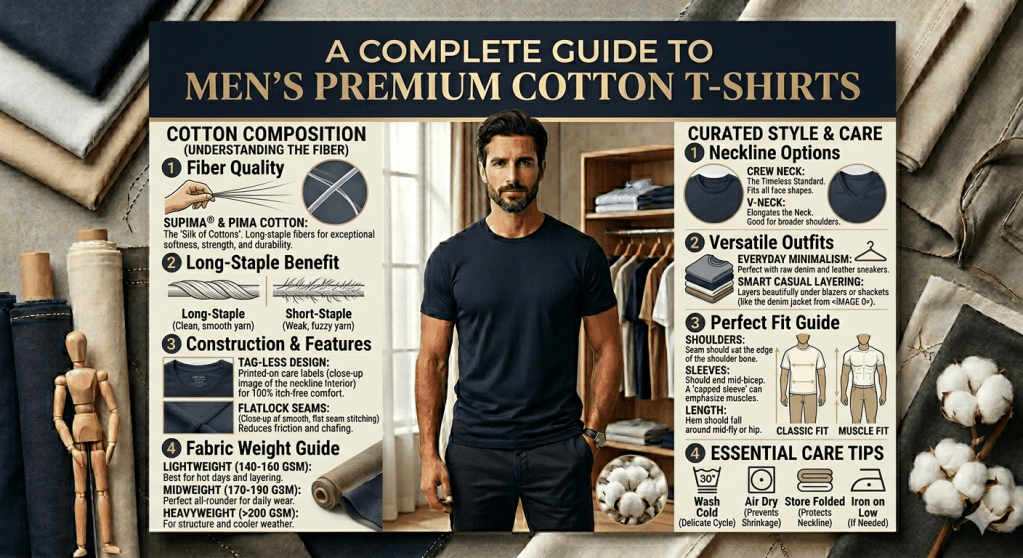
Every man has a t-shirt origin story without realizing it. The shirt he bought on a whim that somehow became his favorite. The one that shrank in the wash and got demoted to gym duty. The one that still looks brand new three years later for no obvious reason.
None of that is random. It all traces back to specific choices in fabric, construction, and fit that most shoppers never stop to examine.
This guide walks through the entire anatomy of a premium cotton t-shirt, piece by piece, so you understand exactly what you’re paying for and why it matters.
Starting From the Raw Material
Before a t-shirt is a t-shirt, it’s just raw cotton fiber. This starting point shapes everything that follows.
Where the Cotton Comes From
Cotton grown in specific regions, like the American South for Supima or Egypt for Egyptian cotton, tends to produce longer, finer fibers. Origin alone doesn’t guarantee quality, but it’s often a strong indicator.
Fiber Length and Why It’s the Foundation
Long-staple cotton fibers spin into smoother, stronger yarns. Short-staple fibers, common in mass-market basics, break down faster and create that rougher texture many cheap shirts have right out of the package.
This single starting point is what eventually separates ordinary basics from real quality clothing.
The Yarn and Weaving Process
Once fibers are spun into yarn, how that yarn gets woven determines a lot about the final shirt.
Combed vs. Carded Cotton
Combed cotton goes through an extra process that removes shorter fibers and impurities, resulting in a smoother, more uniform yarn. Carded cotton skips this step, which usually means a slightly rougher, less consistent fabric.
Single Jersey vs. Other Knit Types
Most t-shirts use a single jersey knit, which is lightweight and stretchy. Higher-end versions often use a tighter, more refined version of this knit that resists stretching out of shape.
Why This Stage Matters to You
You’ll never see this part of the process, but you’ll absolutely feel it. This is where a shirt’s smoothness, durability, and overall hand-feel get locked in before it’s even cut into a shirt shape.
Fabric Weight and What It Tells You
Once woven, fabric gets measured by weight, expressed in GSM (grams per square meter).
The Common Ranges
Lightweight shirts typically fall under 160 GSM. Mid-weight, the most common range for premium apparel, sits between 180 and 220 GSM. Heavyweight shirts go above 240 GSM.
Matching Weight to Purpose
Lighter shirts work well in hot climates or for layering. Mid-weight options offer the most versatility for year-round, everyday wear. Heavier shirts suit cooler weather or a more structured, streetwear-inspired look.
Cutting and Construction
After fabric is ready, the next stage is cutting and sewing it into an actual shirt. This is where craftsmanship becomes visible.
Pattern Cutting
Well-made shirts use patterns that account for natural body proportions, creating a fit that sits correctly at the shoulders and tapers appropriately at the waist.
Seam Types
Double-needle stitching reinforces high-stress areas like shoulders, sleeves, and hems. Single stitching is cheaper to produce but wears out and frays much faster.
Collar Construction
A ribbed or reinforced collar band holds its shape over time, while a thin, unsupported collar tends to stretch out permanently within weeks.
Color, Dyeing, and Finishing
The final stage before a shirt reaches shelves involves dyeing and finishing treatments that affect both look and longevity.
Reactive vs. Direct Dyeing
Reactive dyes bond more deeply with cotton fibers, resulting in richer, longer-lasting color compared to surface-level direct dyeing methods.
Pre-Shrinking Treatments
Many premium shirts undergo a pre-shrinking process, which significantly reduces shrinkage in future washes compared to untreated cotton.
Softening Finishes
Some premium cotton tees receive additional softening treatments after weaving, enhancing that immediate soft-to-the-touch feel many shoppers notice right away.
How All of This Translates to Comfort
Every stage discussed so far eventually shows up in how a shirt actually feels on your body.
Softness That Lasts
Better fiber, weaving, and finishing combine to create fabric that stays soft through repeated washing, rather than feeling great once and rough afterward.
Breathability in Daily Wear
Higher-quality weaves allow better airflow, which plays a major role in regulating temperature throughout an active day.
The Real Definition of Comfortable Fashion
This is what comfortable fashion actually means in practice. Not just soft fabric in isolation, but a shirt that performs consistently across washing, movement, and everyday conditions.
How All of This Translates to Style
The same production details that affect comfort also directly shape how a shirt looks.
Structure Without Stiffness
Quality fabric holds its shape on the body instead of clinging or sagging, creating a cleaner silhouette without feeling restrictive.
Color That Doesn’t Fade Fast
Proper dyeing methods mean a shirt’s color stays vibrant much longer, avoiding that washed-out, dull look common in cheaper basics.
Turning Basics Into Stylish Clothing
When fit, fabric, and finishing align, even a simple solid tee starts functioning as stylish clothing rather than a forgettable layer underneath something else.
What to Check Before You Buy
Understanding the production process helps, but knowing what to physically check in-store or online makes shopping much easier.
Read the Fabric Label Closely
Look for terms like combed cotton, Pima, or Supima, along with a clearly stated GSM weight if available.
Feel the Fabric Directly
Smooth, slightly substantial fabric usually indicates better fiber quality and weaving compared to thin, papery material.
Inspect Seams and Collar
Flip the shirt inside out and check for clean double stitching, then gently stretch the collar to see if it springs back into shape.
Understanding Value and Pricing
Once you know what goes into a premium shirt, pricing starts to make a lot more sense.
Why Premium Costs More
Better raw materials, more refined processing, and stronger construction all add cost at each stage of production, which reflects in the final price.
Getting an Honest Yard of Deal
Paying a fair price for a shirt that performs consistently over years is what a real yard of deal looks like, rather than chasing the cheapest option and replacing it repeatedly.
Long-Term Savings
A $40 shirt worn for three years costs far less per wear than a $12 shirt replaced every few months, even though the upfront number looks higher.
Where Premium Tees Fit Into Current Fashion Trends
Production quality aside, style preferences continue shifting in noticeable ways across menswear.
Relaxed, Structured Fits
Boxier silhouettes with clean shoulder lines are becoming more common than overly tight, slim cuts.
Earth Tones Gaining Ground
Olive, rust, and warm neutral shades are increasingly common alongside classic black, white, and grey basics.
Heavier Fabric in Everyday Wear
Heavier GSM cotton, once mostly limited to streetwear, now shows up frequently in everyday premium clothing because of its durability and structure.
These shifts all reflect a broader move toward genuine premium fashion fundamentals, rather than short-lived trends alone.
Caring for Your Investment
Understanding how a shirt is made also explains why certain care practices matter so much.
Cold Water Washing
Cold water protects fiber integrity and reduces shrinkage far more effectively than hot water.
Gentle Drying
Air drying or low-heat tumble drying preserves both shape and softness over repeated washes.
Rotating Your Shirts
Giving shirts rest time between wears reduces overall fiber stress, helping each one last longer.
Frequently Asked Questions
What’s the most important production detail to look for in a premium t-shirt?
Fiber length and quality matter most, since they affect softness, strength, and how well the fabric holds up over time. Combed or long-staple cotton is generally a strong indicator.
Does fabric weight affect how long a t-shirt lasts?
Yes, to some extent. Mid-weight fabric around 180 to 220 GSM tends to balance durability and comfort better than very light or very heavy alternatives.
Why do some premium t-shirts shrink less than others?
Pre-shrinking treatments during manufacturing significantly reduce future shrinkage. Checking for this detail in product descriptions can help set realistic expectations.
Is more expensive always better when it comes to t-shirts?
Not necessarily. Price should reflect actual material and construction quality, not just branding. Checking fabric details remains important regardless of price point.
How many premium cotton t-shirts should a wardrobe include?
Most men do well with six to eight versatile, quality t-shirts in neutral tones, covering a full week with room for laundry rotation.
Can understanding fabric production really help me shop better?
Yes. Knowing what affects softness, durability, and shape retention makes it much easier to spot quality before buying, rather than relying on guesswork or marketing claims alone.
Conclusion
A premium cotton t-shirt isn’t just a finished product sitting on a shelf. It’s the result of a long chain of decisions, starting with raw fiber and ending with the stitching, dye, and finish you can actually see and feel.
Understanding that process turns shopping from guesswork into something far more informed. You start noticing details that actually matter instead of relying on price or branding alone.
In the end, choosing premium apparel comes down to recognizing genuine quality at every stage of production, and trusting that the extra effort behind the scenes is exactly what makes a shirt worth keeping for years, not just months.


